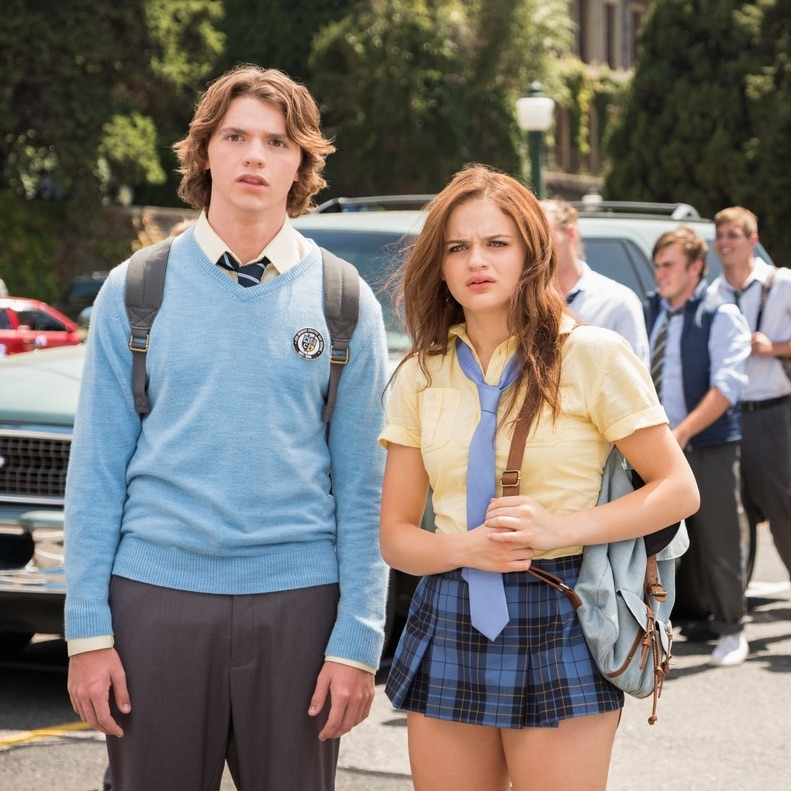
I’m in Love with a Church Girl (2017)

dir. Steve Race

If you took an average person and informed them that a film exists starring Ja Rule as a drug dealer who falls in love with a church-going woman, they simply would not believe you. If you informed them that Michael Madsen and Vincent Pastore i.e. Big Pussy Bonpensiero are also in the cast, they would believe you even less. If you informed them that the film uses a car accident and the spontaneous death of a parent to further its gospel that a drug dealer can be saved by the love of a good godly woman, they would believe you even less still. If you informed them that Ja Rule’s character runs a club night called “Miles Montego Presents Old School Funk Fest” yet the movie has the absolute audacity to never actually show any of it, then they’ve probably already walked away by now and refuse to listen to your nonsense anymore. I’m in Love with a Church Girl is truly nothing short of unbelievable.

I Know Who Killed Me (2007)

dir. Chris Sivertson

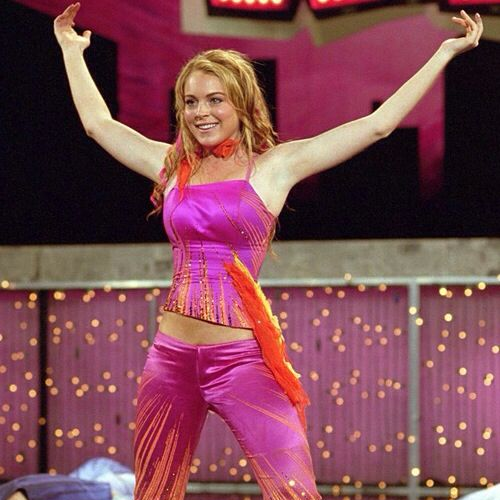
In a way, any film’s first foot forward is its title. It’s apparent quite quickly, then, that I Know Who Killed Me is pretentious, unnecessary, and makes no sense. Lindsay Lohan channels Showgirls as she pouts and lapdances while brooding over how terrible everything is. She finds herself badly injured and goes on a mission to find out why her memories don’t match that of the person the authorities are telling her she is. Through such classic plot devices as bionic hands and stigmatic twins, I Know Who Killed Me unravels a truly insane storyline whilst trying to pass itself off as an intelligent psychological thriller. The motive of the eventually revealed murderer is so hilarious that it has to be wondered whether anyone bothered to read the script more than once. It’s not hard to understand why I Know Who Killed Me set a record for the most Razzie Awards won by a single movie at the time.

I Feel Pretty (2018)

dir. Abby Kohn, Marc Silverstein

I Feel Pretty really hinges itself on the absolute worst of Amy Schumer’s comedy. The type when all you see is a conventionally attractive white woman bemoaning how fat, ugly and weird she is. In I Feel Pretty, Schumer’s character Renee gets concussed and suddenly believes herself to be a skinny, striking, model-esque woman. The premise might slightly, vaguely work if Schumer resembled some kind of bright purple castle-sized ogre in real life, but she doesn’t. Hence this isn’t quite the hilarious leap of faith the movie seems to think it is. I Feel Pretty therefore just comes across as thoroughly mean, as though the audience is supposed to be sniggering at Renee’s burgeoning self-confidence. Even this is done very weakly, though – Renee’s big strides include no longer having to wait to get served in a bar. Groundbreaking. Obviously the movie’s end moral is all about inner beauty, but it’s made even more vapid and pointless when the protagonist possesses a significant level of conventional outer beauty.

I Am Here… Now (2009)

dir. Neil Breen

In which Neil Breen plays God. Hardly a leap for Neil Breen, who quite obviously considers himself to be God anyway – this time he’s just not sugar-coating it with an alias. Coming down to Earth in human form on a journey to Vegas to punish humankind for their wrong-doing, Breen spends most of this movie wandering a plain and gazing into middle-distance with an attempted melancholy air. Of course, Breen being Breen, he just tends to look slightly constipated at all times. This isn’t one of Breen’s most entertaining endeavours, but it still has his classic swollen ego alongside a non-existent production budget. Therefore, like most of Breen’s movies, I Am Here… Now is a bit like watching a home movie by the class’ self-proclaimed best filmmaker, then discovering it’s just stock footage of sky and sand, interspersed with long scenes of himself monologuing without a shirt on.

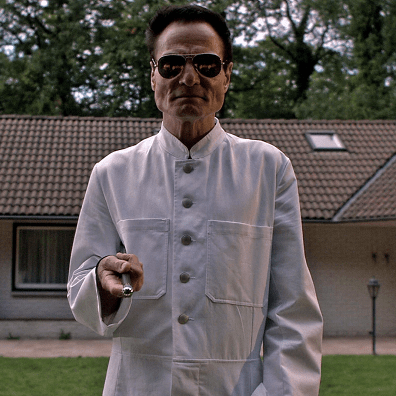
The Human Centipede (First Sequence) (2009)

dir. Tom Six

The Human Centipede unabashedly only ever existed for one reason: to shock. The real disappointment of First Sequence is that it fails to even do that. Obviously the premise is grotesque, but as publicised as it was, you’d think the full movie offers something slightly more, even just a kernel. It does not. It’s just people being sewn together by a mad man. Aside from the odd entertaining leer or monologue from the mad man, for some reason played with genuine dedication by Dieter Laser, First Sequence is a total bore. People run. People scream. People get sewn together – but we already knew that. There’s nothing remotely shocking about First Sequence past the fact that it’s a Human Centipede film, and that initial shock wears off extremely quickly.

House at the End of the Street (2012)

dir. Mark Tonderai

Jennifer Lawrence plays an emotionally intuitive teenage girl who moves to a new neighbourhood with her mother. We know she’s emotionally intuitive not because she offers clever insights or friendly support to those around her, but because she sits around playing banal songs on her guitar. She befriends the brother of a missing girl who apparently committed a murder at the house at the end of the street, and soon unearths a dark secret. Of course, the dark secret is pretty rote, and isn’t as compelling or disturbing as the movie seems to think it is, but them’s the breaks with a teenage horror movie. Like a bland teenage girl singing songs on her guitar, there’s a lot of intention to seem impressive and special, but fundamentally it’s just the same thing we’ve all seen and heard before.

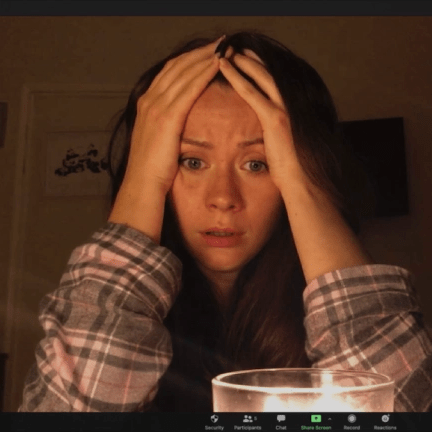
Host (2020)

dir. Rob Savage

Host was released to critical acclaim, which suggests the bar for movies got extremely low during the coronavirus pandemic. The format is cute, although it’s nothing Unfriended didn’t already do – a bunch of friends get together on a video conferencing call, and the movie is done as though the viewer is looking at the screen. This time they check out an online séance for fun, only to discover that demonic forces are real, and they’re peeved. The scares are non-existent; there is no tension at all. Each character is as annoying and pathetic as the last. You don’t particularly want to see anyone survive, so there’s no investment in what’s going on. They all behave like total idiots so there’s no worry that something like this could feasibly happen to you, even if malevolent spirits exist. Host is also a bit strange as there’s a bunch of women in their late teens or early twenties, and then one random much older guy who suddenly shows up sometimes – but nevermind that, seeing as Host fails for so many other reasons.

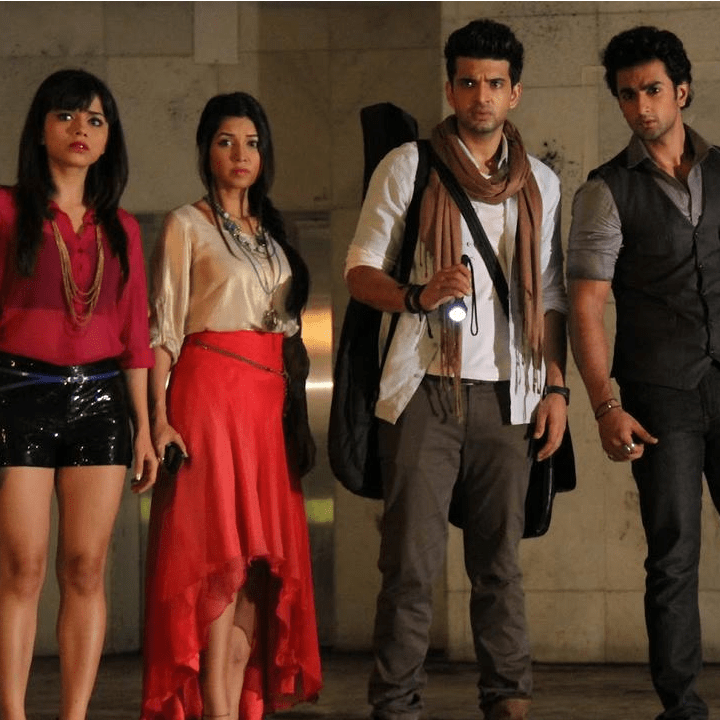
Horror Story (2013)

dir. Ayush Raina

It’s Bollywood trying to do a dramatic horror. It was always going to be hilarious. A group of friends decide to check out an abandoned local hotel, which is rumoured to be haunted. Horror Story is genuinely a laugh a minute, with wide-eyed screams and hysterical running accompanying the most rudimentary of horror tropes. Think TV sets working without power, or scary wheelchairs. Each character is a copy-and-paste of the other; the boys are all the same and the girls are all the same. Except, of course, there’s one all-important Final Girl. Of course, she’s the most modest and unassuming of the bunch. Horror Story is loosely based on the Stephen King short 1408, but with its melodrama and Bollywood flair, this is probably not the vision King had in mind.

Holiday in Handcuffs (2007)

dir. Ron Underwood

Trudie (Melissa Joan Hart) has a family who always pressurises her to be in a relationship. How understandable! But this year, she has the perfect boyfriend she can bring home for Christmas. How delightful! Unfortunately, he breaks up with her right as they’re about to go and meet her family. How sympathetic! So she grabs an antique gun, holds it up at a total stranger she’s just met (Mario Lopez), puts him in handcuffs and forces him to come home with her and masquerade as her boyfriend. How… relatable? The disarming (excuse the pun) thing about Holiday in Handcuffs is it genuinely doesn’t seem to realise just how psychotic it is. It’s all fluffy, and cutesie, and happy, from beginning to end. The colossal crime committed by the protagonist is written off as an expected quirk of a desperate single woman. The kidnapping victim inevitably finds himself falling for Trudie’s charms, but the movie doesn’t stop to consider that this is less a romantic meet-cute and more a manifestation of Stockholm Syndrome. Possibly the scariest Christmas movie out there.

Her Best Move (2007)

dir. Norm Hunter

A teenage girl has to balance sports, friends, family, romance, and education. That’s the movie. Just, y’know, life. Despite the central conceit of – gasp! A girl playing football – the film is pretty generic, with each character stepping into their moulded place: Encouraging Best Friend, Eager Father, Sympathetic Mother, Boyfriendy Boyfriend. It’s nice to see a film featuring a young girl who’s talented at football, but the movie seems to believe this is more of a curse than it is a blessing. By the time the main character’s busy life has propelled her into a breakdown, the audience knows it’s not so bad because it’s all scored to upbeat pop songs. Wouldn’t want too much conflict, now.

Harriet the Spy: Blog Wars (2010)

dir. Ron Oliver

Anyone even vaguely acquainted with Harriet the Spy will immediately wonder what the hell it has to do with blogging. This version ages Harriet up to 16; one would think she’d be over the fairly childish spy games by this age, but ostensibly not. Therefore her “spying” just comes across a lot more like stalking and telling on people. The central conflict is a war over who gets to be the official blogger for the high school class; lower stakes may never yet have been found in a teen movie. There’s a random pop star who of course immediately becomes the love interest, and of course almost immediately forgives any massive betrayals of trust from the protagonist. This film basically proves that the fundamental idea of Harriet the Spy doesn’t really work in a world where everyone posts all their business online anyway.

Gordy (1995)

dir. Mark Lewis

Gordy pulls off the incredible feat of being a rip-off of Babe, despite the fact that it actually came out a few months before Babe did. It still feels like a cheap imitation, though. A small talking farm pig becomes famous – why did two of these movies get released in 1995, anyway? In this version, the pig is actually understood by humans who “take the time to listen”, meaning any small children watching will cry over the fact that their pet rabbit never seems to talk no matter how much time they take to listen. Gordy also goes deep into country “charm”, including a little girl singing a painful rodeo song and ostensibly the entirety of Arkansas turning up to dance and applaud, because she’s just so good. The plot then descends into pure madness, including the inheritance line of a business empire, a devious villain trying to sabotage the good guys, and a mad dash to save some pigs from slaughter. Babe’s climactic scene was just a small pig herding some sheep into a pen; somehow that was way, way more impactful.

Gooby (2009)

dir. Wilson Coneybeare

This alleged heart-warming coming-of-age tale is one of the most downright terrifying films to ever exist. A boy – who is way too old for the silly stick drawings of aliens he produces in his spare time – meets his childhood teddy bear, Gooby, come to life. Gooby is frankly one of the scariest sights, full-stop. His bulging eyes, his stiff limbs, the fact he’s even shown to have razor-sharp teeth in one particularly disturbing scene. Most of the film is the boy and Gooby running around woods or supermarkets, set to a soulful pop song, to show just how much they’re bonding. You’d be forgiven for thinking Gooby is supposed to be a mere figment of the lonely boy’s imagination, but the movie really goes out of its way to stress that, nope, the giant talking bear is real. Inexplicably, he’s voiced by Robbie Coltrane, who in 2009 definitely had better things to do, like working on the ongoing Harry Potter films. Although, the film has a definite air of having been shot in the ’90s – the haircuts, outfits, and Gameboys all suggest as such. So maybe it simply took a decade to get released, because no one wanted to attach their name to such an atrocity.

Goat Story – The Old Prague Legends (2008)

dir. Jan Tománek

Goat Story is freaky. It’s just freaky. And not just because of the shoddy computer animation, which gives every character such bulging eyes and stilted movement that the visuals alone make Goat Story the stuff of nightmares. But that’s not enough – Goat Story has to push things further. It has to make the characters sing annoying songs about nothing. It has to shove in disturbing sexual innuendo and giant bouncing breasts on the main female love interest despite the fact the movie is supposed to be for kids. It has to weave in a subplot about a monk who sells his soul to the friggin’ devil. And it has to all be centred around an obnoxious talking goat. The only thing freakier than the fact that Goat Story exists is the fact that Goat Story 2 exists.

Goat Story 2 / Goat Story with Cheese (2012)

dir. Jan Tománek

One would be forgiven for believing it couldn’t get any worse than Goat Story, but wow, it really does. Goat Story 2 manages to somehow be even madder, scarier and stupider than the first one. The same horrific animation stays. There are idiotic songs and annoying characters again. But this time, the adventure is centred around the children of the first film’s main couple. Goody. And it’s also about… cheese. They make cheese, and the king demands cheese, so the realm’s cheesemakers are kidnapped. Cheese is a really high-equity concept in this one. Most perturbing of all, is in the English-language version at least, the eponymous goat is suddenly cast as a man, although it’s a woman in the first one. No one ever acknowledges it though. It’s just another layer of horror to an already horror-saturated series.

Gnomeo and Juliet (2011)

dir. Kelly Asbury

Romeo and Juliet, as told by animated comedic gnomes. Oh good. Clearly someone came up with the title and decided to build a movie around it, but even that doesn’t excuse the total absence of any humour, romance, or basic effort at all from this film. The jokes are all of the calibre of a mushroom calling itself a “fun guy”. GEDDIT?! Tragically the voice cast includes the likes of James McAvoy, Emily Blunt, Michael Caine, Maggie Smith, and Patrick Stewart, among others. Difficult to understand what compelled them to this project, but even their talents can’t save the sheer ugliness of the animation. Nobody wants to look at these bug=eyed, flat-faced gnomes for longer than is strictly necessary.

Gladiformers: Robos Gladiadores (2007)

dir. Marco Alemar

Video Brinquedo’s rip-off of Transformers. The entire film takes place in a single setting – a very awkward fighting ring where gladiator robots are fighting for no discernible reason at all. Said gladiator robots have names such as Julius Drive, Magnum Tutor, and Korjo Displo. Said names are yelled out with such fury, such dedication, such seriousness, it feels like they’re going for Best Animated Feature at the Oscars. Yet for all its lunacy and lack of plot, Gladiformers manages to be strangely compelling. It’s total nonsense, but it’s done with so much commitment that it’s kind of endearing. Out of all the total drivel churned out by Video Brinquedo, this one seems to have had the most effort put into it. At the very least, it’s arguably a notch better than Transformers.

Gigli (2003)

dir. Martin Brest

Obviously, Gigli is disgusting. Jennifer Lopez playing a lesbian character who winds up so enamoured with Ben Affleck’s mobster charms that she turns straight for him? It’s an insult. Especially when the supposed sexy chemistry is conveyed by moments such as Lopez spreading her legs and whispering “It’s turkey time – gobble gobble”. In addition, we have a character repeatedly bleating his insistence on going to “the Baywatch”. He’s supposed to be neurodivergent, which is a hideously basic caricature in itself, and his obsession with seeing scantily clad women is always portrayed as delightfully endearing, rather than anyone taking a single solitary second to challenge it. But beyond the audacity of treating women like malleable playthings for whichever man happens to be around, Gigli is just dull. It doesn’t really know what it’s doing, and meanders from scene to scene with tired attempts to shock. Murder! Sex! Attempted suicide! For two straight hours. Straight, because that’s what Gigli insists on, after all.

Ghost Rider: Spirit of Vengeance (2011)

dir. Mark Neveldine, Brian Taylor

Sadly, Spirit of Vengeance isn’t quite as much fun as the first Ghost Rider. By this time they really embraced how utterly ludicrous the whole Ghost Rider concept is, and dial everything to 11. Exorcisms, demons, explosions – it’s all designed to be as outlandish as possible. But Nicolas Cage, who embodies outlandishness as a rule, doesn’t seem to be having quite as good a time in this one as he is in the first one. The thing with something like Ghost Rider is the hilarity comes with how seriously the film seems to be taking itself. The earnestness is what makes the insanity so much fun. Spirit of Vengeance is a bit too self-aware to as entertaining as its predecessor. That being said, it’s still a flaming skeleton riding around on a motorcycle delivering justice to evildoers, so it’s obviously still inherently a bit entertaining.

Ghost Rider (2007)

dir. Mark Steven Johnson

A man sells his soul, and technically gets his side of the bargain, but it’s underpinned with tragic consequences. He hurtles himself into a void of risk-taking and self-destruction, with his old childhood sweetheart being his only potential source of salvation. His old demons come back to haunt him, as he has to reckon with the decisions of his past and whether he can truly be saved in the present. Oh, and all of it centres on the man being turned into a flaming skeleton creature who rides around on a motorcycle. Ghost Rider is hilarious because it genuinely takes itself so seriously, it’s hard to tell whether it ever realises how totally insane it is. When Nicolas Cage’s tormented tough guy is swigging jelly beans from a martini glass, you’d think that maybe, just maybe, the movie realises what it’s doing. But it never lets up. It never gives the audience a cheeky wink. It just goes full throttle into this made world of evil spirits, blazing cadavers, and candy cocktails. That’s why it’s so much fun.

G-Force (2009)

dir. Hoyt Yeatman

G-Force is a family film about a bunch of talking guinea pigs and other animals. For something so inherently basic, it’s weirdly hard to follow. There’s intelligence operations and spy gadgets and microchips and FBI stings and computer viruses. There’s also a cackling British villain played with maximum Britishness by Bill Nighy. All of which makes G-Force seem like an aspiring Die Hard or Mission Impossible. It’s just slightly undermined by the whole “talking guinea pigs” thing. Or plot twists such as the talking mole turning out to be, er, a mole. It feels a bit like a frantic fever dream; it’s very difficult to imagine the concept of “talking FBI guinea pigs” originating anywhere except possibly a crack den.

Friday the 13th Part 2 (1981)

dir. Steve Miner

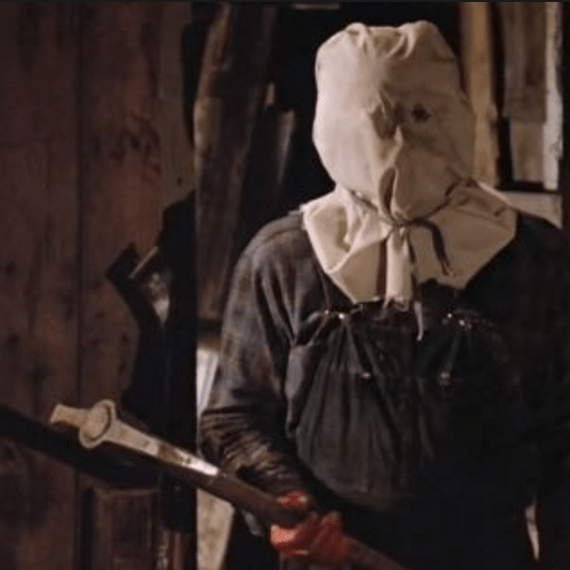
This Friday the 13th sequel basically takes the 15-second “twist” climactic scene of the first one and makes a whole movie out of it. There’s not really even an attempt at a plot anymore. The first one at least explored a backstory and gave its killer a motive, meaning this one already has the foundations established and can just dive straight into murder, murder, murder, murder. Like the first one, it’s interspersed with horny teenagers, and idiots who don’t realise it’s better to stay away from the danger rather than blindly wandering straight into it. Like the first one, the Final Girl makes it through, despite overwhelming odds. It’s unclear why Jason Voorhees always likes to leave one girl behind, but I guess without her, there’d be no one to tell the sordid tale?

Friday the 13th (1980)

dir. Sean S. Cunningham

Friday the 13th has gathered such a massive following as a cult slasher film. Quite an impressive feat considering the total hilarity of where it all began. The teenagers being murdered one-by-one at a summer camp obviously do the classic horror thing of constantly running headfirst into danger rather than running away from it, but the danger in Friday the 13th is so campy that it’s hard not to laugh. The vengeance plot driving the whole thing works its way through arrows, knives, and even a machete. Of course. Obviously the Final Girl lives to tell the tale, including its outlandish “twist” ending. Still, this one has a tad more plot to it than Friday the 13th Part 2.

Foodfight! (2012)

dir. Lawrence Kasanoff

It’s difficult to talk about Foodfight!. It’s difficult to even think about Foodfight!. This is a serious contender for all-time most grotesque film ever made. Everything about it is completely, monstrously ugly. The animation is ugly, as though every character was specifically designed to be as repellent as possible. The sexual innuendo is ugly, with weird jokes about “melting in your mouth, not in your hand”, giant bouncing breasts, and dominatrix-style outfits liberally peppered through a movie that’s supposed to be for children. The product placement is ugly, with brand mascots being shoved in the audience’s faces with no shame whatsoever. The mere fact that an estimated $45–65 million was spent on this atrocity is ugly. There’s some solace to be found in its only making $73,706 at the box office, but it’s still not enough to make up for Foodfight!‘s existence in the first place. A sheer nightmare.

Fatal Deviation (1998)

dir. Shay Casserley, Simon Linscheid

Young Jimmy finds himself in a mysterious world of martial arts tournaments and drug lords. In short, it’s an Irish kung fu movie. And it’s exactly as good as that sounds. The entire film feels like one giant blooper reel, with terrible acting and shoddy fight choreography. There’s even a car crash that was allegedly completely unintentional, but kept in the movie anyway. It’s an obvious passion project, with the creator James Bennett also starring in the main role, and it was apparently an attempt to convince Hong Kong film producers that he was a real martial arts film maker. It is highly likely the attempt failed.

Fire Maidens of Outer Space (1956)

dir. Cy Roth

It’s pretty obvious that Cy Roth – director, producer and writer of Fire Maidens – was thrilled to be making a movie at all. Didn’t matter that the plot was nonsense and visual effects a joke – at least he was making a movie. Five astronauts, making their abundant masculinity known through chain-smoking and wide-legged stances, journey to the 13th moon of Jupiter where they find a community of scantily-clad, nymph-like women who like to sing and skip around. The story lies in the women wishing to kidnap the men so they can essentially perform death by snoo-snoo – but there’s also the presence of a dangerous monster, intent on harming the women. Fire Maidens is downright uncomfortable, with the monster wearing a dark costume and being played by a black man, while all the milk-white heroes talk about how inhuman it is. But it’s also pretty hilarious. A rocket flying through space is portrayed through a cardboard cut-out on a string. The men having to fight off sex-crazed women is such an egotistic premise that you can’t do much but laugh. It’s disturbing to think people were proud of this as a finished product, but it’s also a bit adorable.

Double Down (2005)

dir. Neil Breen

A Neil Breen special. Surprising no one, Breen stars as the intrepid hero. This time it’s secret agent and hacker Aaron Brand. Aaron is in a bit of a pickle, because he’s become trapped in an interdimensional time loop. How did that happen? Well, it’s because he converted the mind of his murdered wife into an artificial intelligence entity that he’s hidden in laptops strewn across the desert. What’s that? That makes no sense? Of course it doesn’t – it’s a Neil Breen film. It’s not Breen’s most entertaining film, but it’s up there, with his trademark terrible visual effects and nonsensical monologuing. Fundamentally it’s yet another excuse for Neil Breen to cosplay as a tortured genius. Of course, Breen plus genius always results in sheer Breenius.

Fateful Findings (2012)

dir. Neil Breen

A Neil Breen classic. One of the Neil Breeniest films to ever Neil Breen, perhaps only outclassed by Twisted Pair. The plot, if it can even be called that, is about as mental as can be expected from Breen: the hero is a hacker-novelist (standard) who unearths government secrets, while also reconnecting with his childhood best friend, while also grappling with the consequences of a magical object he interacted with in his youth. He’s now pretty much impervious to damage, healing rapidly from a car accident. Also pretty much every woman in the vicinity throws herself at him, powerless in the face of his limitless charm and chiselled good looks. Apparently. Fateful Findings is essentially Neil Breen telling the world that he is no less than a god, and should be viewed as such. As he tells the world about the “most secret government and corporate secrets” he’s unearthed, high-profile figures start to spontaneously kill themselves. They can only be considered a proxy for the audience. Any way necessary to stop Breen’s incessant prattling.

Fanaa (2006)

dir. Kunal Kohli

Some pretty typical Bollywood shenanigans in this one. A blind girl falls in love with a man, and even sleeps with him, getting pregnant before marriage. Scandalous enough, but then the audience discover he is a terrorist. Then the man dies. Then Then the blind girl gets her lifelong blindness magically cured. Then it turns out the man didn’t actually die, and years later he finds the girl and their son – but of course, she doesn’t recognise him. The audience is supposed to just go with it. This is all interwoven with a police subplot, helicopter chases, explosions, and of course many a flamboyant song-and-dance scene. Standout aspects include Kajol’s “blind woman” acting, which consists of her looking slightly over the shoulder of anyone she’s speaking to, and the final climactic conflicts which culminate in way more violent deaths than one would have expected from a Bollywood rom-com. Fanaa seems to be Bollywood’s attempt to get every genre into a single film. It does not work, but it’s definitely entertaining anyway.

Baazigar (1993)

dir. Abbas-Mustan

Baazigar as a film can be summarised quite well by its titular song. Kajol’s character has met Shah Rukh Khan’s character and, unaware that he’s currently in a relationship with her sister (Shilpa Shetty), indulges in a fantasy sequence about his many charms. During the song, he’s portrayed as a matador. He also dresses up as Zorro. He’s also a sea captain. He also sometimes wears some very short denim shorts. It’s a total mess of themes, tones and concepts, because the song can’t decide which one it wants to go with. That’s the same with Baazigar the movie as a whole. It goes from tragic family drama, to rom-com, to a quite unbelievable serial killer storyline, all with the unexpected suddenness of Shah Rukh Khan flinging Shilpa Shetty off a building. It’s never really clear who we’re supposed to root for or why everyone is too inept to catch the extremely obvious murderer. The whole thing feels like a fantasy sequence.

Falling Inn Love (2019)

dir. Roger Kumble

One of those rom-coms that proudly proclaims being a city girl is inherently a soulless and terrible thing, and so all women seeking happiness need to move to “the country”. In this case it’s taken to extremes. Christina Milian plays Gabriela, who necks about three bottles of wine before entering a contest to “win an inn” in New Zealand, whatever that’s supposed to mean. Shock horror, it’s a scam and the inn is totally run-down, but Gabriela finds purpose in fixing it up, while becoming acquainted with all the adorable townsfolk. New Zealand, as a country, should really sue this film – the folksy stereotypes and simplistic portrayal of a beautiful country are nothing less than insulting. Even more insane, is the film couldn’t even give Gabriela a Kiwi love interest – she’s instead thrown an Australian actor, replete with obviously Australian accent, alongside the very weak excuse that the character went to university in Australia. Oh, and there’s also a comedy goat. Just because.

Failure to Launch (2006)

dir. Tom Dey

Pretty much nothing about Failure to Launch adds up to a coherent message. It’s firmly suggested that a grown man living at home is a pathetic waste of space, but then it’s acknowledged he may have a decent reason for doing so, like grief. But then he’s encouraged to move out anyway. It’s suggested it’s manipulative and deceitful to feign a relationship with a man for money, but then the film pleads that perhaps the woman had an emotional backstory that fairly assuages her guilt for doing so. So it’s all fine, really. The whole thing is just a bit nothingy – two people meet under false pretences, grow genuinely close, then the false pretences are exposed for a third act conflict, then they reconcile and all is fine. No point, no purpose, no message. Failure to Launch decisively fails to launch.

The Emoji Movie (2017)

dir. Tony Leondis

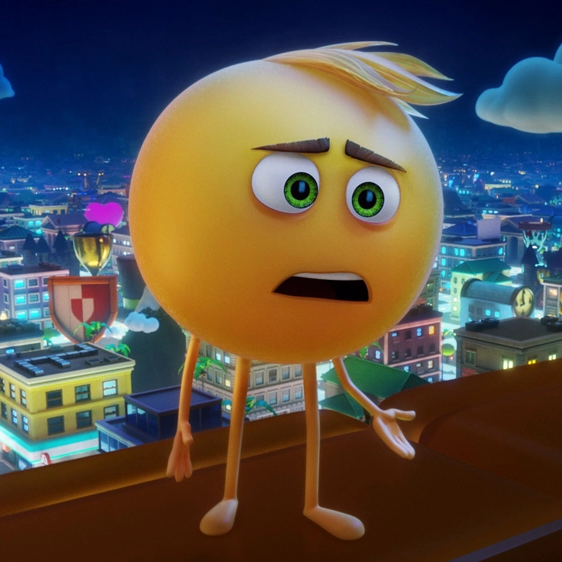
There may well have never been a more cynical, less creative conceit for a film. Phones and social media are popular, so why don’t we make emojis have their own world? The result is obviously about as shallow and one-note as, well, an emoji. Practically every line is a nudge and wink to the audience – Candy Crush! Spotify! Dropbox! Oh no, a firewall! But loudly shouting the names of apps doesn’t have the endearing effect the movie thinks it does. When compared to the ingenuity of something like Inside Out, which spent time crafting its character’s inner psychology, this movie instead quite obviously scrolled through a phone for thirty seconds and went, “Yep, these will do.” The Emoji Movie was the first animated movie to win any awards at the Razzies, and it decisively earns that claim.

Drop Dead Fred (1991)

dir. Ate de Jong

The sole trait of the character Drop Dead Fred is that he’s annoying. Unfortunately, by making Drop Dead Fred obnoxious and unlikeable, it also makes Drop Dead Fred obnoxious and unlikeable. Seems obvious, but the movie didn’t seem to realise it. Phoebe Cates plays Elizabeth, a young woman who begins seeing her old childhood imaginary friend Drop Dead Fred, played with an unpleasantness that’s unusual to see from someone as talented as Rik Mayall. It’s hard to tell whether the movie is supposed to be a charming coming-of-age tale, because the scenes of the grown Elizabeth interacting with a man who isn’t there come across as much more scary than adorable. But he’s definitely not a figment of her imagination, as established later in the film – he’s real. It’s just that only she can see him. It sounds more like a haunting than a psychological device to boost her self-confidence.

Domino (2005)

dir. Tony Scott

Domino thinks it’s tough. It’s pretty unabashed about it. The entire thing is saturated in lurid yellows, with strange stuttered shots and disorienting zoom-ins. Domino, a bounty hunter played by Keira Knightley because someone somewhere thought that was a good idea, struts around pouting and frowning and muttering such “deep” lines like “Reality eclipsed into the asphalt horizon”. This meaninglessness is pretty pervasive throughout the film. We also get treated to such delights as a woman shrieking on Jerry Springer about how combined ethnicities such as “Blacktino” (black and Latino), “Koreapanic” (Korean and Hispanic), and “Chinegro” (just, urgh) should be valid concepts adopted by the world. In short, Domino spends two straight hours insisting it knows what it’s doing when it really, demonstrably does not.

Dog Days (2018)

dir. Ken Marino

Okay, so, it’s Love Actually, but with dogs. An ensemble cast with interweaving romantic storylines – but the majority of the “interweaving” is simply that they all use the same vet. It’s a pretty lazy conceit. Obviously the characters are all bland stereotypes. Obviously there’s a creepy incel who we’re supposed to feel bad for because he’s an awkward geek, even though he considers himself almost aggressively entitled to women’s affections. Obviously Ron Cephas Jones plays a wise old man, so peaceful and contemplative he might as well have been sent directly from heaven. It’s the same old film as ever. There’s the sole benefit of cute pups to look at, but even that’s undermined when the film spontaneously decides to kill one of the dogs, purely to shove in a sad emotional beat. Two seconds later they’re all laughing and joking again. As you were.
Dirty Grandpa (2016)

dir. Dan Mazer

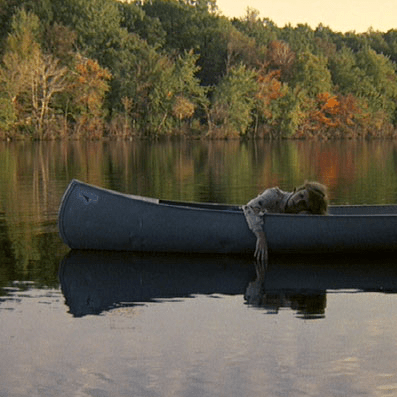
In this veritable cesspool of obscenity, there is not a single redemptive factor to be found. The “story”, though the word affords Dirty Grandpa far more than it deserves, follows titular grandfather Richard “Dick” Kelly (played, tragically, by Robert De Niro). After his wife dies, he embarks on a doggedly zany adventure with his grandson Jason (Zac Efron, who spends the movie with a look of traumatised horror on his face as though he’s having a 102-minute-long Vietnam flashback). Tasteless jokes are flung, mercilessly, against almost every conceivable demographic: ethnic minorities, LGBTQ+ people, women, women who have lots of sex, women who don’t have lots of sex, Jewish people, Romani people, deaf people, dumb people, visually-impaired people, people in general. In one particularly cringe-inducing scene, a triumphant De Niro — not satisfied with his attempt to creep out the audience with his stilted geriatric rapping — gleefully yelps out the n-word to a room full of black people. Lo and behold, they shriek in delight and accept the lewd white man as one of their own, because apparently no one told Dirty Grandpa that it’s the twenty-first century and sensitivity is actually a thing now.

Death Note (2017)

dir. Adam Wingard

Death Note is based on the anime, but it feels absolutely nothing like it. Light Turner finds himself in possession of the mysterious Death Note (why it seemingly dropped to him from the sky is never explained), and discovers that writing a person’s name in it means he can kill them. Oh, but he has to imagine their face while doing it. And it doesn’t work if the page is ripped out and burned. But doing that only works once. There are so many convoluted rules – the metaphysics of it all work much better in the anime where there’s more time to breathe, but in a 100-minute film it feels much more like it’s being made up as they go along. The characters themselves are thoroughly detestable, with Light’s love interest practically getting off to the power of murdering whoever she wants. Throw in Willem Dafoe’s sneering spiky demon and Lakeith Stanfield’s parkour-happy detective, and Death Note barely holds together as film.

Cyberbully (2011)

dir. Charles Binamé

Where to even start with Cyberbully? It demonstrably believes itself to be a feature-length PSA, one which tugs at the heartstrings and imparts a valuable lesson. That lesson? Cyberbullying is bad. The thing with Cyberbully is, as it features vapid teenagers catfishing and slinging insults on some Facebook rip-off called Cliquesters, it has the feel of a much older movie. It’s like they only just discovered that the internet exists, and Cyberbully was the inaugural attempt to let everyone know that teenagers can be terrible online. In 2011. Thus it’s all incredibly basic and sanitised. The teenagers are cruel to each other, but it’s all so formulaic that it’s difficult to feel much sympathy. It’s just copied-and-pasted “slut”s and “whore”s strewn about the victim’s timeline. Mean, but underwhelming. Despite the keen intent to explore hard-hitting subject matter, it manages to restrict any genuine impact by lazy storytelling choices such as: a girl struggling with her absent father; a peripheral gay friend whose sexuality is merely used as a device to earn sympathy points; the climactic suicide attempt being thwarted by the protagonist’s inability to take a cap off a bottle. Because God forbid a hard-hitting film about cyberbullying dare to explore what the real-world consequences could be.

Crawl (2019)

dir. Alexandre Aja

A girl, her dad and her dog get hunted by crocodiles during a hurricane. It’s stupid, but it’s fun. Crawl teeters at the Sharknado level of being too self-aware to be funny, but it just about keeps up its seriousness throughout. The performances are heartfelt, so it’s easier to get swept into the terror of being chased by crocodiles, as idiotic a concept as that may be to sustain a plot of an entire hour and a half. The film also adopts an unexpected sweet optimism, which is pretty rare in a movie like this. In most horror films, you immediately know what the fate of the cute little dog is going to be, but Crawl elects to go another way. Praise be to Crawl.

Confessions of a Teenage Drama Queen (2004)

dir. Sara Sugarman

It’s hard to believe that this and Mean Girls came out in the same year. Two Lindsay Lohan-fronted high school comedies, yet so, so different. Confessions is a totally vapid movie, with Lohan’s drama queen protagonist swanning about calling herself pseudonyms, trying to get in with celebrities, desperate to front the school play, generally demanding that everyone look at her at all times. She is obnoxious. Her enabling friends are obnoxious. Her nemesis, a bland Megan Fox (for whom the same song seems to play every time she’s on screen), is obnoxious. Lohan’s character is supposed to become more relatable by the end, but she resolutely does not. She’s a brat from start to finish. The film just doesn’t seem to operate in the real world; during the school’s musical production of Pygmalion (no, not My Fair Lady – they make a different, far worse one), a giant paper mache bearded head swings by. Turns out it’s George Bernard Shaw, but who the hell would know that? This film was made for no one in the real world.

Con Air (1997)

dir. Simon West

Basically, someone took the phrase “air con”, swapped it, and used it as an excuse to put a bunch of criminals on a plane. Nicolas Cage, John Cusack and John Malkovich all desperately try to out-grimace each other as the prisoners take over, with Cage’s grizzled ex-sergeant doing his utmost to restore order. Who would have thought placing a bunch of dangerous, violent criminals on a plane with very little security would culminate in bad consequences? But you know the consequences won’t be too bad, because the ex-sergeant has a pregnant wife waiting patiently at home. Honestly, the flagrant lunacy of it all has to be admired. Con Air knows exactly what it is, and it doesn’t try to hide it.

The Christmas Tree (1991)

dir. Flamarion Ferreira

The Christmas Tree is, frankly, bewildering. There is just no reason for this film to exist. The story wasn’t worth telling – it’s all about some sad orphans trying to stop a tree from getting cut down, in possibly the lowest stakes of any kids’ film ever. Ostensibly none of the cast enjoyed it, as most of them sound like they’re reading their lines with a gun to their heads. The animators seemingly didn’t enjoy it, seeing as the animation is so lifeless and flat that the innocent little orphans’ smiling faces look more like haunted dolls than lively children. Unbelievably, the moral of the movie is summed up again in the frankly insulting line, “You always win when you are good”. Tell that to the world’s countless real, maltreated orphans. Just be more good, kids!
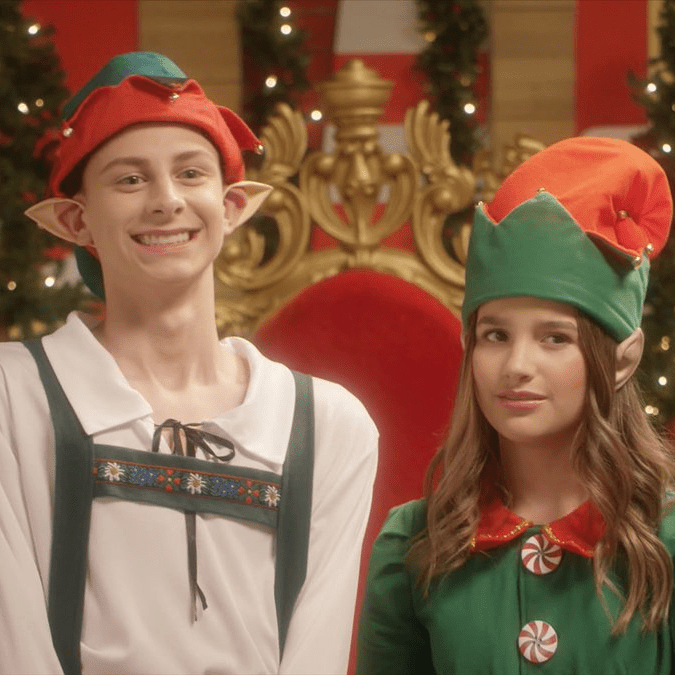
The Christmas Trap / Christmas in the Heartland (2018)

dir. Harvey Lowry

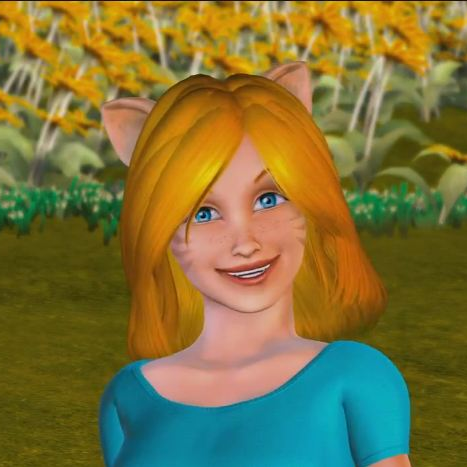
With its title, The Christmas Trap is pretty blatant about being a Christmas-themed rip-off of The Parent Trap. Okay, fine. Except in this film, the two main girls Kara and Jessie don’t meet at summer camp, but on a plane. And in this film, they’re not twins. They’re in fact complete and utter strangers, who spontaneously decide to take each other’s places after a couple of hours chatting on a plane. There’s no real reason for it, except they just kind of can’t be bothered to see their own respective families. Most fortunately for them, neither girl’s grandparents has apparently even seen a photo of their own granddaughter before, so the ruse works for quite a long time. The Christmas Trap is honestly just kind of spiteful, with the layers of deceit going well beyond the girls’ weird prank. There’s so much more lying and betrayal and infidelity where that came from! But it’s okay, because it ends with all the cast singing a happy pop song. What an absolutely unsettling experience.

Child’s Play 2 (1990)

dir. John Lafia

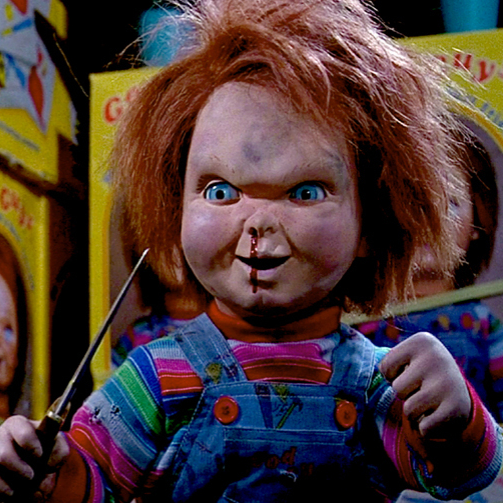
Because, apparently, the world just demanded more Child’s Play. Through the incredibly convoluted scenario of the doll manufacturers wanting to reassure the world that the Chucky doll is safe despite all that pesky murdering it got up to, it goes and reassembles the pieces of Chucky after he was destroyed in the first movie. Then there’s an electrical power surge – and so the sneering Chucky is back. He does some more murders, as is his wont. He pursues the little boy from the first film, intent on transplanting his own soul into his body. You have to wonder why, though, seeing as Chucky is ostensibly so much more powerful and difficult to defeat in 29-inch doll form than he ever was as a living, breathing human being. Hence the fact that the Chucky franchise, seemingly, will never end.

Child’s Play (1988)

dir. Tom Holland

It’s incredible that Child’s Play became such a famous, successful franchise, seeing as the inaugural instalment just feels like someone’s idea of a joke. The spirit of a serial killer possesses a doll, Chucky, and lives out its malevolent impulses though it. It’s dumb. Of course it’s dumb. But Child’s Play plays it pretty straight, with all the tingly creepy music, over-the-top screaming, jump cuts, and fraught chase scenes one would expect from a movie genuinely trying to scare its audience. By the time Chucky is going full-on Rasputin, with no manner of violence seeming able to kill him, the audience is probably more in cries of laughter than of fear.

Catwoman (2004)

dir. Pitof

Catwoman follows the story of Patience, a shy and unassuming designer who unearths a conspiracy at the cosmetics company she works at. So she gets murdered. But it’s okay – a bunch of cats bring her back to life as a pseudo-cat, a “cat woman” if you will. Catwoman is truly one of the worst superhero movies. Not only does it entirely eschew plot and character, but it replaces them with such a hypersexualised view of its protagonist that it’s hard to fathom that the movie genuinely tries to present itself as a powerhouse of feminism. The reason that other purported cat women like Patience haven’t been given prominence before is attributed to “male academia”. Sure, not just the fact that it’s really, really stupid. In between Halle Berry slinking about on rooftops pouting, and a laughable mess that can only be described as a sexy basketball game, Catwoman is a pure joke.

C Me Dance (2009)

dir. Greg Robbins

Why is it a “C” instead of “See”? Perhaps it stands for something. What could “C” stand for in this movie? Well, it’s a diehard Christian movie, so it could be Christian me Dance? Church Me Dance? Christ Me Dance? It follows a teenage ballet artist, Sheri, who discovers she has a rare type of cancer. Cancer Me Dance? C Me Dance is so over-the-top, so earnest, and so idiotic, it feels more like a parody of a movie than an actual sincere attempt to tell a worthwhile story. Sheri is blessed with powers by God so she can turn more people to the ways of Christ before her untimely demise. And sometimes she dances. It’s full of melodramatic pop songs and people gasping at nothing. It’s pretty hilarious – definitely worth C-ing.

Burlesque (2010)

dir. Steven Antin

So much of Burlesque, from the title to Alan Cummings’ shameless Emcee character, is obviously lifted from Cabaret. Yet it would be difficult to find a movie further away from the intelligent style and substance of Cabaret. Christina Aguilera plays Ali, a woman who perfects her burlesque performance skills seemingly by wandering around the streets dancing to pop songs on her iPod. She joins the troupe at Tess’ (Cher) burlesque house, and a number of improbable consequences ensue. Ali rudely crashes at the bartender’s house, taking advantage of his space and his things, so naturally he falls in love with her. Kristen Bell plays a jealous dancer who zeroes in on Ali as her chosen arch nemesis, for no real reason except, well, she’s there. There’s an amazingly contrived plot which involves building zones and air rights, culminating in Tess battling to save her club despite seemingly never bothering to pay her bills. It’s peppered with extravagantly dumb song-and-dance numbers, and obviously Aguilera is a brilliant singer and performer, but the whole thing would have worked better as an album promotion than an actual film in its own right.

Bridesmaids (2011)

dir. Paul Feig

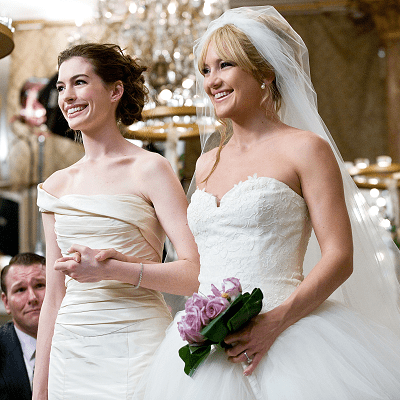
Bridesmaids gets a lot of kudos; many places even call it one of the best films of 2011. It makes one wonder whether anyone actually sat down and watched it. Annie Mumolo and Kristen Wiig’s story of a group of bridesmaids, centred mostly on maid of honour Annie (Kristen Wiig), is hailed for allowing women to do comedy just like the men do. Ooooh! But where is the comedy, exactly? Is it Annie behaving so selfishly from start to finish that it’s a wonder she has friends at all? Is it Chris O’Dowd’s chronic levels of patience with a woman he seems to have no spark with whatsoever? Is it Melissa McCarthy taking a dump in the street? Presumably, it’s Melissa McCarthy taking a dump in the street. Bridesmaids is meant to be a giant leap for feminism, because the women are finally doing the stuff formerly reserved for men in movies. It’s a shame no one told Bridesmaids that it wasn’t funny when the men were doing it, either.

Bride Wars (2009)

dir. Gary Winick

Bride Wars is a serious contender for being the most mean-spirited film ever made. Two childhood best friends transform into shrieking manipulative banshees, wholly consumed in their hatred for one another. Why? Because they each want to be the first one to get married. This apparently justifies all manner of sabotage, including messing with each other’s fake tan and hair dye to result in zany wrong colours, and even one of the women falsely outing the other as pregnant. The worst thing is Bride Wars claims this is all in good fun, just silly girls’ larks, just another romp like the women do. Because obviously it’s all resolved and they’re best friends again by the end of the movie. But no actual living, breathing woman in the world could relate to the behaviour espoused in this film – no woman who isn’t also a psychopath, anyway.

Breaking Dawn (2004)

dir. Mark Edwin Robinson

Not to be confused with Breaking Dawn. Ahem. This non-vampire Breaking Dawn follows a medical student exploring the murder of a mental patient’s mother. Predictably, the patient’s psychosis begins to affect the medical student, as she finds herself wondering whether the supernatural figures she starts seeing are real, or whether she’s losing her mind. Breaking Dawn obviously fancies itself a probing treatise on the fragility of the human mind, but unfortunately the acting is so poor, the story so convoluted, the scares so pathetic, that it doesn’t carry the gravitas it’s aiming for. The film doesn’t even seem to be sure whether its protagonist’s name is Dawn or Eve. This lack of a grasp on basic storytelling is pervasive.

Breakin’ 2: Electric Boogaloo (1984)

dir. Sam Firstenberg

The title that launched a thousand memes. Three street dancers attempt to stop the demolition of a local community centre that the big bad establishment want to turn into that hive of greed and vice, a shopping mall. Obviously this is a standard tale of the little guy facing the man, and using the power of community spirit – not to mention, of course, hip dance moves – to overcome the man’s evil. Oh, and Ice-T is in it. The movie quite obviously does believe in the story it’s telling, as basic and generic as it is. It’s just endearingly goofy in its sincerity. About as goofy as the title Breakin’ 2: Electric Boogaloo.

Brat: Holiday Spectacular (2018)

dir. Shannon Flynn

An original Brat TV movie. Oh, okay. Brat TV is a community of teenage content creators and social media influencers, sharing videos and shows through YouTube. Their Holiday Spectacular features all their generic, vapid faces, running around a mall at Christmas time and engaging in the most insipid “inspirational” storylines imaginable. Think a redeemed shoplifter, or a bored and lonely girl finding new friends. Heart-warming. It’s very much a paint-by-numbers Christmas film, trying to do the old Love Actually formula of several “interweaving” storylines, except this time they’re all teens with so little going on in their lives, a trip to the mall is ostensibly the focal point of their year.

Blind Dating / Blind Guy Driving (2006)

dir. James Keach

Blind Dating is, frankly, offensive. It’s just offensive. You’d think there’d be something of value in a movie centring a disabled character and exploring an interracial romance, but, well, there is not. Chris Pine’s Danny is a man, blind from birth, who’s mocked by his peers for being a virgin at 22. How charming and kind. So he embarks on a series of dates, trying to get laid. He also decides to register for an experimental medical treatment that could allow him to see for the first time ever, during which he runs into a nurse he begins to fall in love with. Everything about Blind Dating is a total joke. The fact that Danny’s therapist starts undressing in front of him, while he can’t see, for some sort of bizarre sexual kink. The fact that the nurse’s Indian family are the biggest Indian stereotypes in the world, replete with Indian restaurant, arranged marriages, and jazzy head-bobbling. The fact that Danny’s brother is an obnoxious misogynist who throws pies into the faces of women who don’t want to date him, and the audience is supposed to find this charming. The fact that Danny just gets his lifelong blindness cured and is cool with it almost immediately. Blind Dating is an inexplicable mess.

Birdemic 2: The Resurrection (2013)

dir. James Nguyen

Sequel to the incomparable Birdemic: Shock and Terror, Birdemic 2 is still pretty enjoyable in its own right. Not least because it’s basically the same film over again. The same characters, the same terrible acting and awkward dialogue, shortly plagued by the same killer birds again. This time it’s caused by acid rain – again, truly a damning indictment on the damage we humans have done to the planet. Surely our day of reckoning, through the medium of killer birds, is near. Birdemic 2 doesn’t feel quite as earnest as the first one – when the characters pick up coat hangers to fight their assailants, it feels a bit too nudge-nudge-wink-wink – but it’s still a decent slice of the joy that only Birdemic can bring.

Beverly Hills Chihuahua (2018)

dir. Raja Gosnell

It’s called Beverly Hills Chihuahua. Does it even sound like it’s going to attempt to be a good movie? Most of the movie isn’t even set in Beverly Hills – the titular chihuahua gets dognapped in Mexico, and spends the movie trying to get back home. She contends with an evil Doberman, a lonely German Shepherd, and a fellow chihuahua who has the hots for her. There is a whole load of inexplicable plot, including plots to steal expensive collars, and attacks from rogue mountain lions. The dogs go from trains, to deserts, to an Aztec temple. One dog seemingly even has PTSD from his time as a police dog. A movie called Beverly Hills Chihuahua absolutely does not need this amount of attempted complexity to it, because the complexity falls apart pretty quickly when you remember the whole thing is fronted by a spoilt chihuahua. Homeward Bound, it ain’t.

Bee Movie (2007)

dir. Simon J. Smith, Steve Hickner

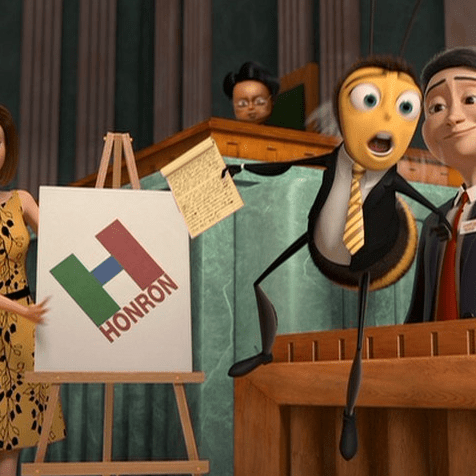
The sheer existence of Bee Movie is cause enough to weep uncontrollably, before you’ve even watched it. Jerry Seinfeld, arguably one of the most prolific comedians of all time, decided to do a 3D animated film about a bee who sues the human race for its honey use. Said bee also pursues an ostensibly romantic relationship with a human woman. God friggin’ knows how that’s supposed to work. Quite frankly, none of it works. There’s a reason Bee Movie has spawned so many parodies and memes – because it’s an utterly inexplicable entity. There is no reason for it to exist. It should not exist. Even its own rip-off, Little Bee, manages to be marginally less egregious than Bee Movie itself.

Best F(r)iends: Volume 1 (2017)

dir. Justin MacGregor

Best F(r)iends: Volume 1 is quite, quite mad. It was always going to be. It’s the first time Tommy Wiseau and Greg Sestero starred in a movie together, 15 years after The Room. Sestero plays a homeless drifter who meets a peculiar mortician – played by Tommy Wiseau, he sort of looks like he could be a corpse himself. This unlikely partnership culminates in the two conducting an elaborate scheme to make money off the gold fillings the mortician has collected from corpses over the years. Of course, paranoia grows between the two, leading to animosity. Friends or fiends?! The clever, clever title sure doesn’t let us know. Volume 1 is genuinely a lot of fun. It’s just about on the right side of madness. Although you know it doesn’t really make sense, you get caught up regardless. Sadly, most of the good work is undone in Best F(r)iends: Volume 2.

Best F(r)iends: Volume 2 (2018)

dir. Justin MacGregor

Best F(r)iends: Volume 1 manages to strike the right tone between compelling and offputtingly insane. Unfortunately, Volume 2 begins veering more decisively towards the latter. Greg Sestero spends much of it frowning or staring vacantly, as deception after deception by the people around him is unveiled. Turns out he perhaps should have trusted his mortician pal along, eh? Because Tommy Wiseau was never going to agree to play a true villain. Speaking of whom, there’s even a bizarre revelation that his mortician character used to date the Black Dahlia. This alongside blackmail and attempted thefts and murders. Curiously, though it dials up the madness, Volume 2 simply isn’t as much fun as Volume 1. It grits its teeth and plods through the plot’s incessant twists and turns, taking itself just that little bit too seriously. Perhaps the intention was to make all the craziness seem crazier still, but the result is sadly a bit underwhelming.

Beauty and the Briefcase (2010)

dir. Gil Junger

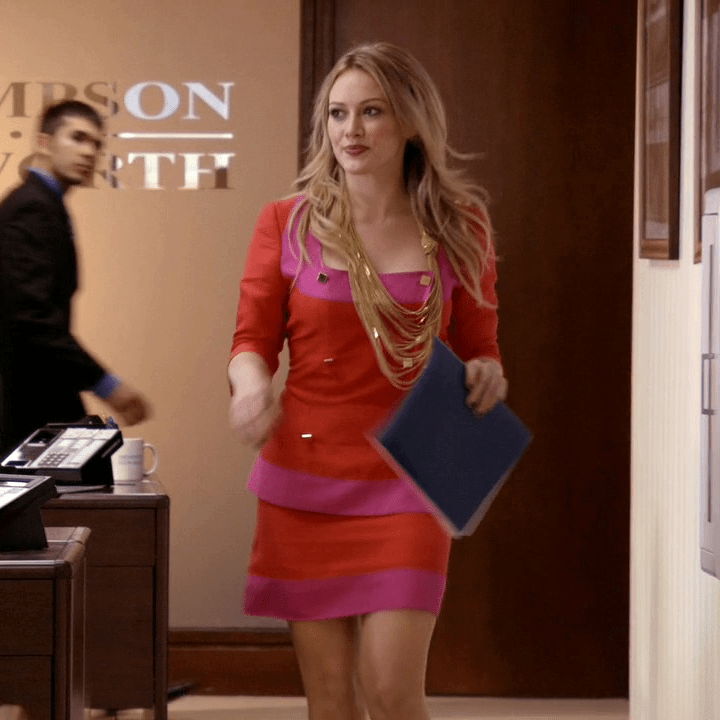
Pretty standard tale of a woman growing close to a man under false pretences, only to realise that real feelings are blooming. This time, Hilary Duff plays an aspiring fashion journalist, who sort of falls into a job at a faceless corporate enterprise. Her intention is to date businessmen, presumably to pad out some pointless article about what it’s like being in a relationship with someone who owns a suit, but she slowly begins falling for her boss. He begins falling for her, too, as she shows her various skills – such as wearing bright, clashing clothes that are wholly unsuitable in a business setting, or adding colour to pie charts. In short, they have nothing in common, but because “opposites attract”, all the deception and manipulation is quickly forgiven and they fall in love forever and ever. Happily ever after!

Beautiful Creatures (2013)

dir. Richard LaGravenese

Beautiful Creatures feels a bit like an extended music video for some vacuous gothic pop band. Quite obviously trying to continue the Twilight tradition of a love story affected by a family’s supernatural leanings, Beautiful Creatures is more preoccupied with its characters’ swooshy dresses and histrionic posing than with trying to present a coherent plot. There’s weird Civil War flashbacks, premonitions, ancient books, curses – it feels like they made it up as they went along. Of course, it all culminates in an assured conviction that there is light, and dark, and no in between. People must make the choice to be good or bad. How splendid that it should be so straightforward. Performances from people like Jeremy Irons, Viola Davis and Margo Martindale cannot save the fundamental shallowness of Beautiful Creatures.

Beastly (2011)

dir. Daniel Barnz

Every single aspect of Beastly is hilarious. This attempt to retell the Beauty and the Beast fairytale through a “dark” modern lens is about as shallow and melodramatic as can be. Alex Pettyfer plays a smug teenage boy who gets transformed by a witch into a beast. Being a beast, in this case, involves being made hairless, scarred, and tattooed. His eyebrows are replaced with the words “Embrace suck”, except stylised to look like Arabic script, for absolutely no discernible reason whatsoever. Vanessa Hudgens plays the beauty who can save him, so he runs about shooting drug dealers, rescuing soon-to-be-deported children and curing blindness. Obviously the whole experience transforms him into a kind and gentle soul, who realises looks don’t matter – so he’s given his good looks back. Beauty and the Beast has never been the best moral compass, but Beastly takes the hypocrisy and pandering to massive extremes.

Batman v Superman: Dawn of Justice (2016)

dir. Zack Snyder

It’s boring. It’s just excruciatingly boring. Dawn of Justice takes DC’s biggest superheroes and makes them scowl and snarl at each other under dark cloudy skies. For two and a half hours. Neither Ben Affleck as Batman nor Henry Cavill as Superman seem as though they remotely want to be there – jaws set hard, voices gravelly with growling, eyes completely dead as though they’ve no longer any reason to live. Batman and Superman’s rivalry exists for such contrived reasons, and is abated for even more contrived reasons. This film alone can serve as a reason why the Marvel Cinematic Universe was so much more successful and adored than the DC Extended Universe.

BASEketball (1998)

dir. David Zucker

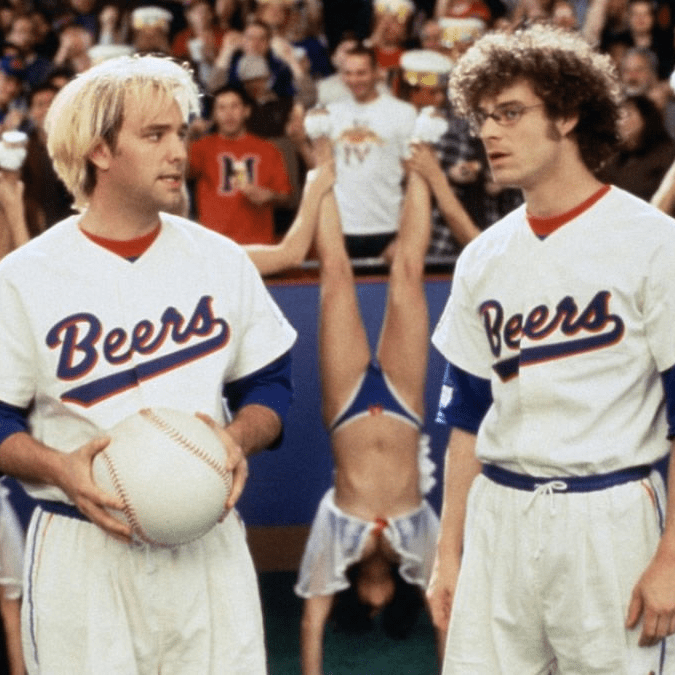
BASEketball is a bizarre entity. South Park creators Trey Parker and Matt Stone star as two best friends who create a weird fusion sport, BASEketball, which involves no sporting prowess to win whatsoever. It grows into a major league sport, but naturally the duo’s friendship suffers in the face of success. BASEketball features brief flashes of brilliant humour, but they’re mostly drowned out by tired sexual innuendos and stupid puns while people pull goofy faces. The mere mechanics of the sport probably aren’t supposed to make sense, but so much time is spent on them that you wish they did. Fundamentally, it’s a slew of childish gags and gross-out humour, with none of the intelligence or social analysis of South Park.

Bad Teacher (2011)

dir. Jake Kasdan

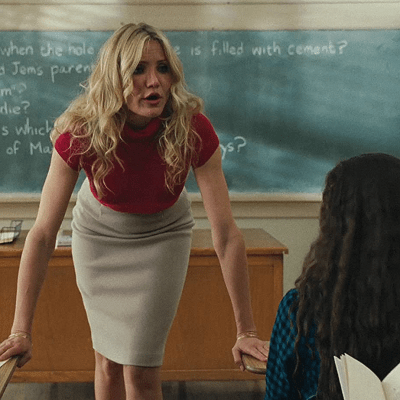
Bad Teacher stars Cameron Diaz as Elizabeth, a terrible middle school teacher who routinely ignores her class and is more focused on raising money to get herself breast implants. It’s supposed to be funny, because she’s ever such an incorrigible rascal, but it’s just infuriating. She behaves like a selfish brat, which could have been interesting were it explored with some intelligence like in, for example, Young Adult. Instead, every man in the vicinity seemingly swoons at Elizabeth’s feet, and because the movie is too afraid to delve into the realities of her entitled behaviour, it flings some sweeping redemption her way at the end. It’s a bad movie with a bad premise, bad characters and bad acting. It’s Bad Teacher.

A Bad Moms Christmas (2017)

dir. Jon Lucas, Scott Moore

Sequel to Bad Moms, A Bad Moms Christmas takes everything that was terrible about the first one, increases it tenfold, and makes it Christmas time. This time, our trio of “rebellious” mothers have their own mothers to contend with. Christine Baranski plays an uptight perfectionist who cares more about her reputation than what her daughter needs; Susan Sarandon plays a gambling drug addict who seems to regularly forget she even has a daughter; Cheryl Hines plays a woman so disturbed, so terrifying, that she routinely wears pyjamas with her daughter’s floating face on them and sits silently watching in secret while her daughter and son-in-law have sex. Wanda Sykes loudly proclaims that these latter behaviours are simply because being a mother is hard, and would drive anyone crazy. Like the first one, A Bad Moms Christmas doesn’t seem to get the difference between needing a break and being an actively toxic parent. But it all ends in a happy Christmas music video, so it’s alright really.

Bad Moms (2016)

dir. Jon Lucas, Scott Moore

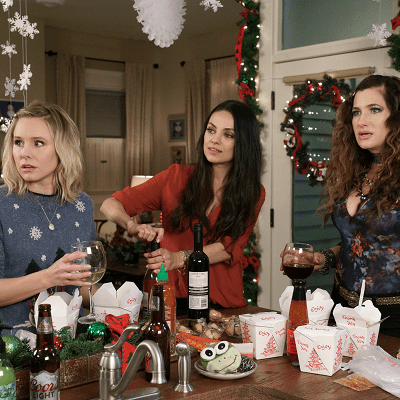
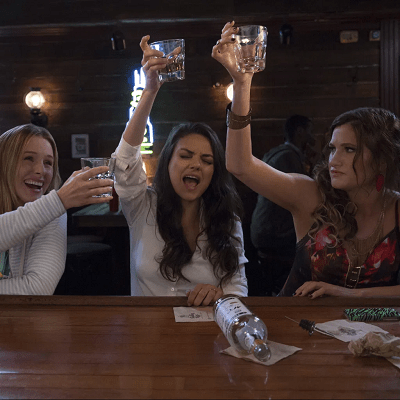
Bad Moms fancies itself a feminist film. It centres on a trio of mothers: while Mila Kunis gets to play the reasonably generic protagonist, Kristen Bell and Kathryn Hahn get the delight of playing her stereotypical sidekicks – Bell is the childish prude, and Hahn the sexually rebellious single mum. The movie lets them be “bad”, which primarily consists of them taking shots, yelling, dancing, and buying doughnuts instead of baking them. Oof, so bad. The movie takes every possible opportunity to announce that, hey, mothers should get to relax too sometimes. And that’s true. Unfortunately the movie seems to confuse relaxation with downright irresponsibility and neglect. It’s a wonder that actors of such a high calibre were attracted to such a stupid movie – a question that becomes even more bewildering in A Bad Moms Christmas.

Ax ‘Em / The Weekend It Lives (1992)

dir. Michael Mfume

Ax ‘Em is basically a home movie. Anyone can see that. Surprising no one, the director Michael Mfume is also the writer, producer and main star. It has neither the budget nor the acting prowess of a real film. It’s quite clearly done for love rather than for money, though. It’s a standard slasher – a bunch of young people run around screaming while some guy comes along with an axe, intent on murdering them all. They run through woods and they run through an abandoned house. It’s dark. There is little hope for survival. It’s utterly standard, except for the fact that Ax ‘Em‘s video and audio quality are so bad, you can’t even work out the characters’ names most of the time. Before the killing starts, long shots are just spent fixated on such intriguing occurrences as the friends eating dinner. This film was not made by a filmmaker.

Sherlock Holmes (2010)

dir. Rachel Lee Goldenberg

Sherlock Holmes is an adaptation of the classic sleuth mysteries, this time made by The Asylum. The very same production house behind classics like Sharknado and Age of the Hobbits as well as such mockbusters as Sunday School Musical. Naturally, this version of Sherlock Holmes contains all the effort and care one would expect from The Asylum. Almost immediately, the film features an attack by a monster squid. By the end, we’re onto giant robot dragons. The Sherlock Holmes character himself is possibly the most prissy, unimpressive incarnation of the character ever put to screen, practically squeaking his lines with a wide-eyed childish wonder that totally undermines his alleged genius. Unequivocally the worst Sherlock Holmes adaptation, not to mention the funniest.

Annabelle Hooper and the Ghosts of Nantucket (2016)

dir. Paul Serafini

Terrible title, terrible movie. Annabelle Hooper follows the eponymous heroine, who embodies a weird synthesis of Harriet the Spy with the Scooby Doo gang. She and her friends – all of whom quite honestly look exactly the same: white and generically good-looking – must unravel schemes of theft and ghostly conspiracies to save the day. The acting is predictably dreadful, as is the plotting, direction and dialogue. The main star is the worst of all – whether it’s her fault or the fault of poor direction, she treats most of the movie like a personal reel, pouting and sighing and posing. Clearly, the producers thought they had a hit on their hands, closing the movie with a promise than Annabelle Hooper will return. To date, she has not.

Anastasia (1997)

dir. Don Bluth

Possibly without meaning to, Anastasia managed to pull off one of the biggest cons of all time. It’s firmly stuck in the memories of most ’90s kids as one of those Disney movies they loved to go back to again and again. The catch being, it’s not a Disney movie. And watching it again as an adult makes that very clearly. Don Bluth was a master animator in his own right, and it shows in the gorgeous backdrops of this fantasy tale about the lost Romanoff princess. But the characters themselves? They’re scary. They’re just scary. Weird sneers and grimaces and pointy-looking faces, including on our main heroine and hero. It’s off-putting, and doesn’t have the softness or attractiveness of a Disney picture. Couple this with a meandering plot that doesn’t really know what it’s doing, and it’s evident that Anastasia can’t compete in the same leagues. Despite fervent efforts by the likes of Meg Ryan, Christopher Lloyd, and even Kelsey Grammer adopting the film’s only even vague Russian accent, Anastasia never amounts to more than a hollow imitation of its peers. It’s not the worst film, but it’s certainly not the best.

American Psycho II: All American Girl (2002)

dir. Morgan J. Freeman

The sequel that nobody on the planet ever asked for, American Psycho II asks the all-important questions: “What if Patrick Bateman of American Psycho got foiled by a 12-year-old girl? What if that 12-year-old grew up to be Mila Kunis? What if Mila Kunis was a sociopath herself and is obsessed with murder? What if William Shatner, too, was there for some reason?” American Psycho II is a bit like S. Darko: so loosely affiliated to the superior original that it’s only in name they really have anything in common. Plus, both seem to fixate less on storyline, and more on having a pretty girl strutting around, blowing kisses and posing. This one, though, was apparently not originally intended to be an American Psycho sequel, even in name – it was supposed to be a totally standalone story, with the American Psycho referencing only shoved in at the last minute. It shows.

Aloha (2015)

dir. Cameron Crowe

Good God, Aloha is a hard one. Bradley Cooper plays an ex-Air Force officer on a trip to Hawaii. In this film publicly promoted as a romantic comedy, our hero is supposed to oversee the launch of a weapons satellite (?!). Later he uses the mass destructive power of sonic waves to destroy the satellite (?!?!). Also he meets a native Hawaiian woman, played by Emma Stone (?!?!?!). Aloha is genuinely uncomfortable to sit through. It’s so earnest about being a light-hearted rom-com that it excuses its characters’ utter selfishness, deceit, and manipulation. It also blithely ignores Stone’s obvious unsuitability to playing a native Hawaiian movie, even though this film came out in 2015 when someone, someone, on the crew should have realised the ridiculousness of it. But Aloha is demonstrably nothing to do with the real world.

All About Steve (2009)

dir. Phil Traill

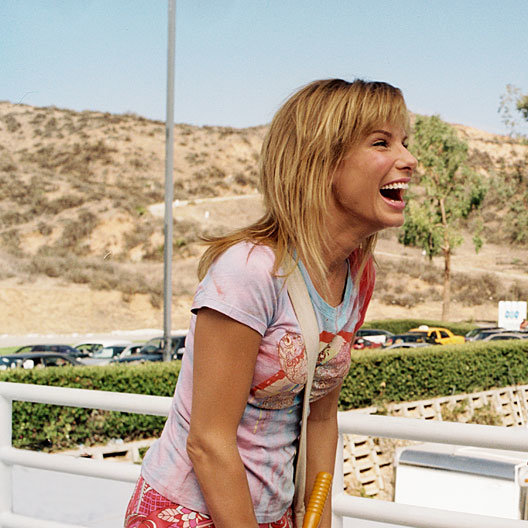
All About Steve stars Sandra Bullock as the frankly unhinged protagonist, Mary. The movie tries to paint her as an immature but misunderstood loner, who just longs for someone to love. Therefore, her rapid descent into full-on harassment and stalking is meant to be a charming personality quirk, rather than a reason to call the authorities. She develops an unhealthy obsession with the titular Steve, played by Bradley Cooper, who initially, quite rightly, regards her as some crazed psychopath. Of course, as the movie progresses, he realises that she is a beautiful person on the inside. The thing is, she isn’t. She’s terrible. He’s terrible. Everyone in All About Steve is terrible. Everyone needs to be put in a facility. There is no sweetly sentimental path to redemption here, even if the movie swears there is.

Age of the Hobbits / Clash of the Empires / Lord of the Elves (2013)

dir. Joseph Lawson

It doesn’t even really know what its own title is, beyond being sure it wants to be some form of Lord of the Rings / The Hobbit rip-off that might bamboozle innocent viewers into thinking it’s the real thing. It even got a restraining order, prohibiting it from being released alongside The Hobbit: An Unexpected Journey as intended. But what else can you expect from The Asylum? Predictably Age of the Hobbits doesn’t remotely compare to Tolkien’s creations. Sure, there are small “hobbit” creatures – there’s also flesh-eating dragon riders and an oppressive tyrannical race called the Java Men. There’s a lot of running around with bows and arrows, and mysterious hooded figures skulking about. It’s basically not a real film, in any meaningful sense of the word.

Albion: The Enchanted Stallion (2016)

dir. Castille Landon

The first thing to realise about Albion: The Enchanted Stallion is that the enchanted stallion’s name isn’t Albion. Albion is actually the name of the magical fantasy realm our young heroine is transported to, via said enchanted stallion. Beyond this the enchanted stallion actually doesn’t do very much at all, despite what the title implies. The entire film is about as confusing as its stupid title, with its warring races, contrived curses, magical sceptres and insipid characters doing little to abate the feeling that it has no idea what it’s doing. Even more confusing is the presence of established actors like Debra Messing and Jennifer Morrison, who were presumably just really bored that week. Even John Cleese, donning a disgusting fat suit meant for comic relief but resulting in nothing much but the audience’s revulsion, stars as the film’s villain. It’s supposed to be a sweeping magical adventure, but mostly winds up being as effective as a horse movie which forgot to include a horse.

After Earth (2011)

dir. M. Night Shyamalan

Although most of the promotion for After Earth desperately tried to conceal that it’s helmed by M. Night Shyamalan, the ruse fails immediately upon simply watching the movie. It so obviously embodies the worst of Shymalan: awkward close-ups, contrived plotting, characters so pretentious they refuse to ever speak in contractions. Will Smith and Jaden Smith play a father and son stranded on a hostile planet, fighting to survive, and it’s quite clear the Smith family saw After Earth as a personal opportunity to boost the family brand, especially considering the original story idea actually came from Will Smith himself. There’s so much grimacing, monologuing and posturing, their characters may as well have been called Tough Guy and Son of Tough Guy. They take everything so utterly seriously, with such fierce grimness in their voices at every syllable, that it makes the entire ludicrous scenario extra hilarious. After Earth was supposed to be about the Smiths, not Shyamalan – the absolute lunacy of each manages to eclipse the other.

The Accidental Husband (2008)

dir. Griffin Dunne

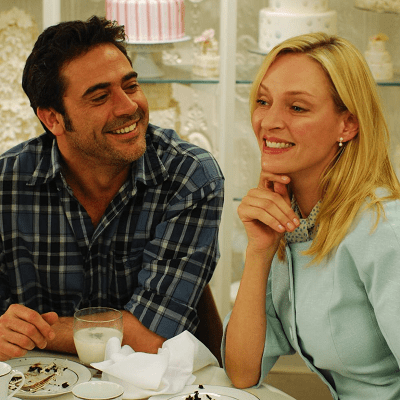
An uptight, meticulous woman (Uma Thurman) finds her life thrown off orbit by a good-looking but oh-so-unorthodox man (Jeffrey Dean Morgan). He’s just so wrong for her. Or is he…?! The Accidental Husband has the essential foundation of pretty much every rom-com ever. This one leans heavy into the clichés, including a boring British stick-in-the-mud played by Colin Firth, with his Colin Firth levels set to maximum. But it pushes the boat out slightly by also including a bunch of random Indian stereotypes, including copious head-bobbling and a little brown boy who’s an expert at computer hacking. Kudos for the attempt at diversity – it might just be nice if you make the ethnic minorities actual well-rounded human beings next time. Although to be totally fair to The Accidental Husband, its white characters are one-note cardboard cut-outs too. So at least it’s all equal.

Abner the Invisible Dog (2013)

dir. Fred Olen Ray

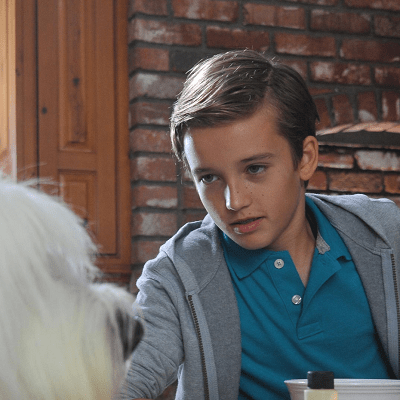
Abner the Invisible Dog barely feels like a real film – it feels more like a parody of a parody of a film. It’s a family film about a boy – who seems about 12 or 13 but generally behaves as though he’s half that – whose family dog Abner drinks a liquid from a toy chemistry set and winds up able to turn invisible. He also talks now. Cue a bunch of zany shenanigans, including hapless criminals who make the guys from Home Alone look like mafia crime dons, and two big bad bullies who try to steal the affections of the bland girl next-door. Abner the Invisible Dog feels so fake, yet so earnest, that it’s hard to know whether it’s in on the joke or not. When the boy’s grandma tells him, “Happy birthday Abner!” is it because the character’s senile and has confused her grandson for the dog? Is that supposed to be funny? Or even more concerning, did the actor herself forget the character’s name, and it’s just that no one corrected her? With a movie as dumb and wacky as Abner the Invisible Dog, it’s kind of impossible to tell.

Snowglobe (2007)

dir. Ron Lagomarsino

One of the two, entirely separate “Christina Milian stars in a movie where a woman gets stuck in a snow globe” movies, the other being A Snow Globe Christmas. It’s unclear why Milian decided to do two of these, seeing as this first one, Snowglobe, is a vapid, cutesy affair which even the most innocent, Christmas-adoring little toddlers would declare too saccharine. Milian plays Angela, a Christmas obsessive who finds finds herself able to travel to the world within a magical snow globe she gets sent in the mail. Obviously this kind of ABC Family film is nothing but sheer idiotic escapism, and it knows it, but Snowglobe pushes the boundaries even by their standards. Everything is red and green; the grown inhabitants of the snow globe world are so completely naive and childlike that it’s grating more than it is endearing. This film is basically a candy cane – sweet, sickly, and really not good for you.

A Snow Globe Christmas (2013)

dir. Jodi Binstock

One of the two, entirely separate “Christina Milian stars in a movie where a woman gets stuck in a snow globe” movies, the other being Snowglobe. Clearly, six years after Snowglobe, Christina Milian just hadn’t had her fill of snow globe themed shenanigans. This time she plays an angel, who bewitches workaholic Meg (Alicia Witt) so she winds up stuck in a snow globe world. Ostensibly, Milian felt she’d already been through the ordeal herself and now had to subject someone else to it. Thus, Meg spends time in the adorable snow-covered village, and slowly learns the true meaning of life: friendship and giving. It’s a heart-warming Christmas message about love and happiness and blah and blah and blah. Also Turk from Scrubs is in it. Just another snow globe movie.

A Fall From Grace (2020)

dir. David Cronenberg

This Tyler Perry Netflix original became infamous pretty much the second it was released, simply due to how awful it is. The plot follows a public defender who takes on the case of a woman accused of murdering her husband. Incredible, then, that A Fall from Grace takes a premise so serious and manages to deliver something so goofy. The film was apparently made in five days, and genuinely feels like it was put together in five minutes. It’s littered with blatant errors, like wigs completely changing between shots, magically disappearing slippers, boom mics invading the frame, and people miming eating and drinking with nothing but air. The attempts to portray dark male chauvinism and abusive tendencies are somewhat undermined when characters scream out lines such as “ASHTRAY, BITCH!” A Fall from Grace sets the bar so low, it really doesn’t have far to fall.

A Dangerous Method (2011)

dir. David Cronenberg

Such an intriguing premise, yet such an idiotic film. A Dangerous Method explores the relationship between Carl Jung, Sigmund Freud, and Sabina Spielrein. Whilst Michael Fassbender and Viggo Mortensen turn in solid performances as the former two, any of Keira Knightley’s efforts as Spielrein are kind of lost in her dreadful Russian accent, which sounds mostly like she’s choking on vodka for the entire film. This movie is supposed to delve into sexual deviancy, the depths of the subconscious, and the torment of insanity – but instead it all feels a bit clinical, a bit box-ticking. It’s as though these emotions are being told rather than shown. A Dangerous Method clearly falls prey to the techniques of the two men it centres – observing, observing, observing, and thus unable to commit to actually doing very much.

1313: Giant Killer Bees (2011)

dir. David DeCoteau

This is but one of David DeCoteau’s inexplicable 1313 series. The key theme of all the 1313 movies? Young, sculpted, half-naked men. The men shower. The men swim. The men just walk around undressed for no reason at all. Basically, the 1313 films are soft, soft, softcore gay porn masquerading as legitimate movies, and 1313: Giant Killer Bees is no exception. There’s a scene of a man lying on a bed and rubbing his own chest, in silence. It lasts for eight minutes. There’s a scene of a man showering, in silence. It lasts for even longer. There’s some stupid nonsense about giant killer bees thrown in, though there’s no attempt to make it make sense – apparently all these men are scientists, something something experiment, something something giant killer bees. The thing is, if this film was solely an excuse to make a porno, it’d kind of be excused – but even more bewilderingly, the entire film ends on a fully clothed man going on a very slow walk around his local footpaths, in silence. That lasts even longer than the half-naked scenes. Just a bewildering experience all around.

Fifty Shades of Grey

dir. Sam Taylor-Johnson

Everyone already knows how awful Fifty Shades of Grey is. The book; the movie franchise; even the franchise it was based off, Twilight. It’s terrible. This inaugural cinematic instalment is just as stupid, just as manipulative, just as pathetic as everything else with the Fifty Shades label on it. Dakota Johnson plays Ana, the young, innocent wallflower who gets roped into (heh) Christian Grey’s (Jamie Dornan) world of abusive, manipulative, psychopathic behaviour masquerading as BDSM. Johnson and Dornan do their very best with the one-dimensional characters, but there is nothing that can truly save Fifty Shades. Christian is abusive. He’s selfish, he’s violent, he’s jealous, he’s controlling, and he’s entitled. The fact that Fifty Shades tries to say this is all just in the name of good sexual kinky fun is an insult. It’s an insult to consenting, healthy BDSMers, who know this kind of toxic relationship is nothing to do with BDSM. It’s an insult to men, implying that a man can engage in all this behaviour and write it off as kink if they just pledge to be a good man deep down inside. And most of all, it’s an insult to women – specifically the women this franchise is aimed at, presenting them with a fantasy of what true love like and encouraging them to pursue it. But no one, no one, should aspire to the hideous relationship between Ana and Christian. Fifty Shades isn’t just bad, it’s dangerous.

3rd World Cops / Fuerzas Especiales (2014)

dir. José Miguel Zúñiga

The two main stars of 3rd World Cops are successful Chilean comedians, who made their name through sketch shows. It shows, as 3rd World Cops is less a movie and more an incoherent collection of random scenes. The lines are drawn fairly quickly: on one side there’s the dim-witted but good-hearted cops who just want to make the world a better place; on the other, the soulless, corporate, corrupt, evil establishment robot people. Beyond that, this movie just has nothing to say. People fall down. People yell. People make goofy faces. Scene after scene after scene, and then it ends. They should have just retained the ideas for sketches, rather than trying to make a film our of them.

3 Ninjas: High Noon at Mega Mountain (1998)

dir. Sean McNamara

The fourth, and mercifully final, of the 3 Ninjas series, preceded by 3 Ninjas, 3 Ninjas Kick Back, and 3 Ninjas Knuckle Up. God only knows what terrible sins we committed as a society to be punished with living in a world where four of these exist. Credit where credit’s due, though, and High Noon at Mega Mountain is easily the craziest of the bunch. Our three annoying little boys have been recast yet again. This time they’re joined by TV action hero Dave Dragon, played by none other than Hulk Hogan, who clearly saw merit to the 3 Ninjas franchise. They run around a theme park. They foil bad guys. There is a highly implausible explosion. This movie was clearly the entire 3 Ninjas cast and crew saying, “Screw it, it’s our last one, let’s do whatever.” And lo, “whatever” is exactly what they did.

3 Ninjas Knuckle Up (1995)

dir. Shin Sang-ok

The third of the 3 Ninjas films, preceded by 3 Ninjas and 3 Ninjas Kick Back, and followed by 3 Ninjas: High Noon at Mega Mountain. Rather disarmingly, this film was filmed alongside the first one in 1992, but released three years later – meaning the cast consists of the three original boys, and doesn’t feature the two replacements that pop up in 3 Ninjas Kick Back. Pretty fitting for the 3 Ninjas saga’s general feeling that it never really knows what it’s doing. This time, our three annoying little boys combat the evil that is toxic waste, defending a Native American village against the big bad establishment. It’s vapid, it’s generic, it’s childish – it’s 3 Ninjas.

3 Ninjas Kick Back (1994)

dir. Charles T. Kanganis

The second 3 Ninjas film, preceded by 3 Ninjas, and followed by 3 Ninjas Knuckle Up and 3 Ninjas: High Noon at Mega Mountain. This one sees our annoying three little boys return, although two of the actors are replaced. Their ninja grandpa also returns, although his name has been changed and no one ever explains why. Another “regular boys who happen to be ninjas” film, this time going heavy on the adolescent distractions: the boys are consumed by such exciting things as baseball games and pretty girls. There’s also a special dagger and an ancient sword and a cave of gold. Typical teenage boy stuff. 3 Ninjas Kick Back is as inconsequential and stupid as the first one. So no wonder it spawned yet another two sequels.

3 Ninjas (1992)

dir. Jon Turteltaub

The first of the 3 Ninjas franchise, preceding 3 Ninjas Kick Back, 3 Ninjas Knuckle Up, and 3 Ninjas: High Noon at Mega Mountain. Quite how 3 Ninjas became a series can only be guessed at, because there is nothing in this first instalment that anyone would want to see again. Three annoying little boys are trained to be ninjas by their mystical Japanese grandpa. Of course, the boys’ “ninja” moves basically consist of them flailing their limbs and squeaking “Hi-yah!”, but you’re supposed to buy that they’re ninjas. The boys’ father is an FBI agent, opening the gateway to generic hijinks involving Bad Guys. It’s basically a shoddy Home Alone knock-off with added ninjas – the boys use their wits and their wiles and their amazing ninja skills to subdue the Bad Guys and win the day. Whimsical little musical cues play whenever something goes their way. Of course it’s a kids’ film, but honestly, any vaguely discerning kid would grow pretty impatient pretty fast.

#Roxy (2018)

dir. Michael Kennedy

As an alleged retelling of Cyrano de Bergerac, #Roxy pretends it’s saying so much more than it really is. And maybe it could have aspired to such heights – but instead it dumbs itself down to shallow teen rom-com levels. Protagonist Cyrus is a shy computer geek. Much of his shyness stems from his self-consciousness over his abnormally large nose. This in itself is a huge stumbling block for #Roxy – the actor’s prosthetic nose is so large, so ridiculous, so utterly fake-looking, that’s it’s a complete distraction. It’s difficult to take the rest of the movie seriously. More infuriatingly, rather than Cyrus being a sympathetic character, he of course goes full-on incel pretty quickly and bemoans how the girls don’t like a nice guy like him. It’s nothing to do with your nose, Cyrus – it’s more about you being a whiny, entitled bore.

Cats (2019)

dir. Tom Hooper

Wow. Just, wow. There is nothing, not a single thing, about Cats that is good. It’s a genuine marvel that not one aspect was done right, even accidentally. The mere conceit was never going to work – because of the frankly insane premise and the focus on spectacle over substance, the original Cats only really works as a stage musical. On stage, you can appreciate the costumes and choreography. Those, and a couple of decent songs, are the real impact of Cats. Well, Cats the movie doesn’t do costumes; it instead does profoundly hideous CGI whereupon every single cat character looks like demon spawn sent straight from kitty hell. Cats the movie doesn’t do well with the choreography, either – most of it’s not even visible a lot of the time, with the camera instead choosing to zoom in on Rebel Wilson’s slack-jawed face or James Corden’s idiotic “Ha ha I’m a fat guy” mugging. And even the couple of decent songs are ruined: Memory, easily the best song in the show, is relegated to Jennifer Hudson shriek-howling the whole thing while snot streams down her face. It’s incredible to think a young family may have gone to the cinema to watch Cats, expecting a light-hearted kids’ adventure just to pass the time, and been assailed with this mess of sheer madness. Jellicle choice? What are they talking about? Why did that cat just disappear into a book? Why do they keep changing sizes? Why is Taylor Swift putting on a British accent, but only sometimes? Why did Idris Elba agree to be in this? Good God, is this closing Judi Dench number ever, ever, ever going to end? Cats is a genuinely bewildering experience.

Troll 2 (1990)

dir. Claudio Fragasso

Troll 2 is utterly delightful. It’s purportedly a sequel to Troll, obviously, but it has nothing whatsoever to do with it. There aren’t even trolls in this movie. That’s only the tip of the iceberg when it comes to Troll 2’s total insanity. The main character is a little boy called Joshua, who seems to be comforted and charmed by his constant visions of his dead Grandpa Seth rather than horrified to his core. His family go on some confusion exchange trip to another town, Nilbog, which our genius hero intelligently unearths is in fact “Goblin” spelled backwards. The goblins themselves look like Chucky the doll mated with a bunch of ewoks, and are about as wildly unthreatening as their lilting, wide-eyed… mother? Queen? Witch? Some weird lady who pulls faces and shrieks a lot. Troll 2 has about a billion laugh-out-loud moments, from everyone’s constant over-acting, to the playdough food, to the sexy corn-on-the-cob scene, to Joshua spontaneously deciding to urinate over the kitchen table, to evil’s bane being found in the form of a double decker baloney sandwich. Seriously, this entire movie is a double decker baloney sandwich.

Birdemic: Shock and Terror (2010)

dir. James Nguyen

Birdemic genuinely has to be seen to be believed. It just can’t be described in mere words. Its shoddy filming, which includes a long opening credits scene where someone has seemingly set their camera on their car dashboard and just driven around for a bit. Its stilted acting, such as the main character proclaiming he’s made “One million dollars” in a slow monotone, before robotically extending his hand for a painful high five with his colleague. Its frankly unbelievable visual effects, in that the film’s titular bird attack is conveyed through the use of crudely rendered bird graphics which look like Clip Art GIFs. The whole thing is supposed to be an environmental treatise – in summary, the birds went crazy because not enough human beings use solar panels, or something. So our band of intrepid heroes obviously collect together their wire coat hangers in an attempt to fight off the threat. How will humankind get out of this one? Well, it just stops. It just stops, and everything is okay again. Birdemic is truly wonderful, easily one of the best worst films ever made. There’s nothing quite like it – even its own sequel Birdemic 2: The Resurrection doesn’t hold a candle.

The Room (2003)

dir. Tommy Wiseau

It’s simply the best! Better than all the rest! There’s a reason The Room has gone down in history as the best worst movie of all time: because it simply is. Everything about The Room is just the perfect level of pure ineptitude. Tommy Wiseau, proud director and producer and writer and main star, is such a peculiar entity. His indeterminate accent, his wild hair, his growling and screeching, his insistence on subjecting a poor eighteen-year-old actress to awkward sex scene after awkward sex scene. There is barely a plot in The Room – it’s ostensibly a “love triangle” but it’s more about how women are evil manipulative bitches who take advantage of the good men in their lives. The acting is hideous, not just from Wiseau but from absolutely everyone, including creepy man-child Denny and whiny old crone Claudette. Not a single scene manages to be coherent. There’s the strange flower shop scene, where Wiseau bursts into a store, buys some roses, pets a dog, and leaves, all within about fifteen seconds. There’s the breast cancer scene, where Claudette reveals her diagnosis only for it to never be mentioned again. There’s the Chris-R scene, where Denny is threatened at gun point because he apparently “bought some drugs” off a guy who never showed up before and never shows up again. The Room is just a spectacular synthesis of everything idiotic, everything outlandish, everything crazy, and all done with the utmost sincerity. At a screening of the film in London once, Wiseau was asked who had inspired him to make The Room, beyond his already stated influence of Tennessee Williams. His response: “Well, you see, you have Johnny, you have Lisa, and you have Denny, so you see, three is better than two. Next question.” This bewildering, head-scratching confusion is The Room. It genuinely is the greatest bad movie ever, by probably the greatest bad filmmaker ever.